
Choosing a headstone: A guide to finding the right memorial
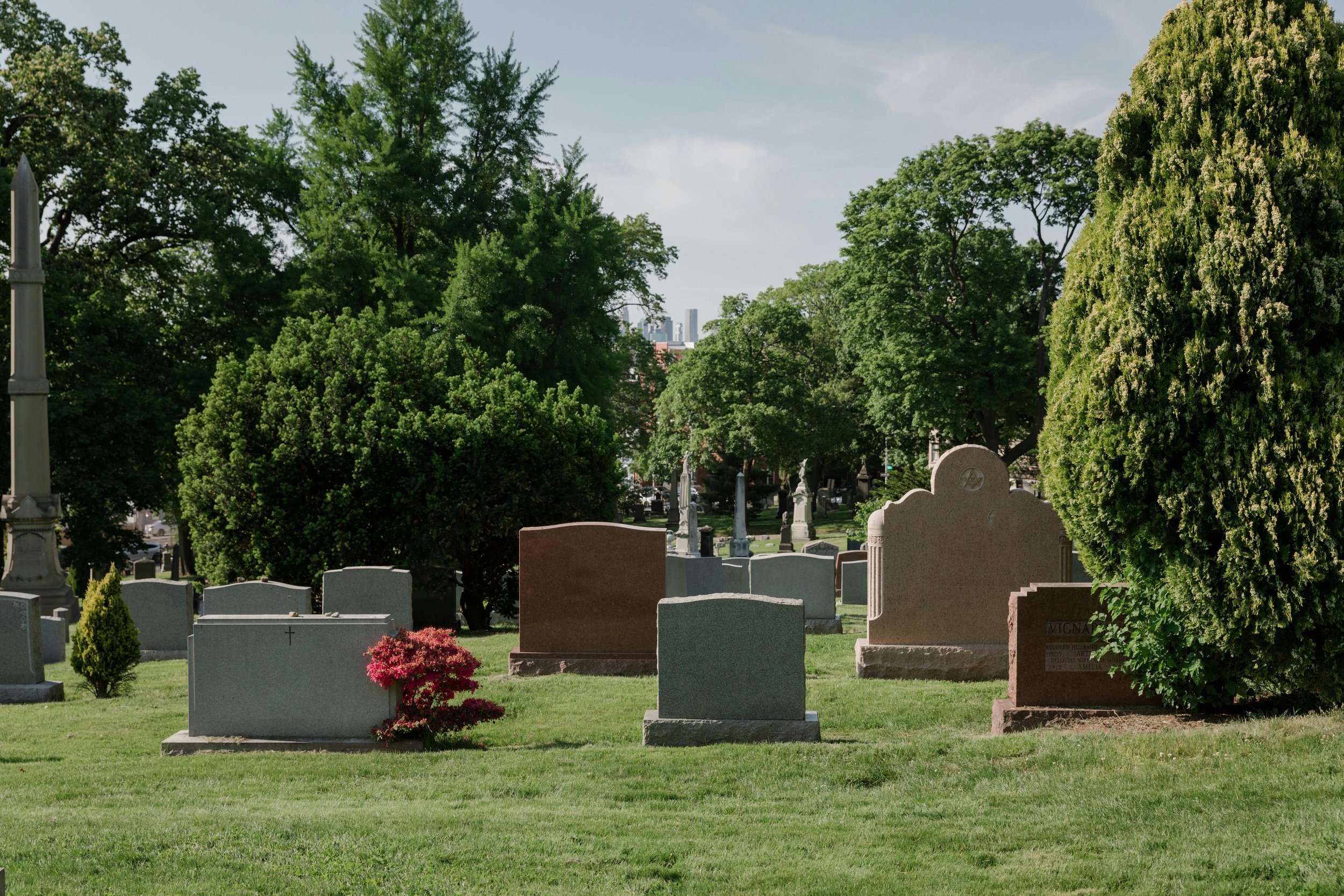
A headstone is one of the most lasting decisions you’ll make before or after someone dies. It will mark a place where people come to remember and to feel close to someone they’ve lost. And yet, for many families, it is a decision made while still deep in grief, often without much prior knowledge of the options available.
This guide is here to help. If you’ve recently lost someone and are not sure where to begin, our guide to what to do when someone dies may be a useful first step. There is no single right answer when it comes to choosing a memorial, but there are good questions to ask, and knowing the basics can make the process less daunting.
Headstones and markers: what is the difference?
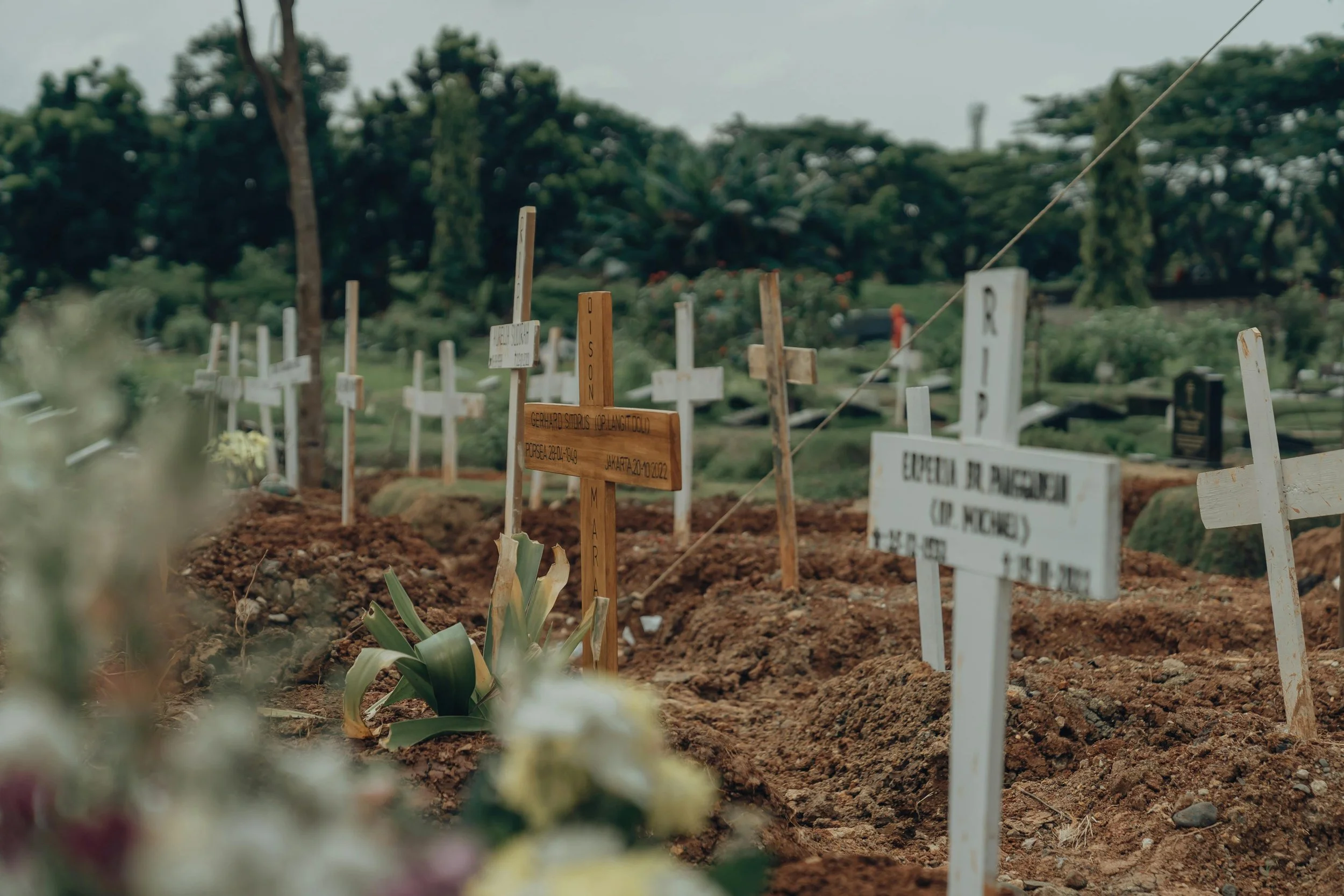
Cross grave markers used to identify a final resting place.
These two terms are sometimes used interchangeably, but they describe different things.
A headstone is an upright monument, traditionally placed at the head of a grave. It’s what most people picture when they think of a memorial. A grave marker, by contrast, is a flat plaque set into a stone base, readable only from above. Markers tend to be smaller and are sometimes required in specific areas of a cemetery or churchyard where upright stones are not permitted.
You may also encounter temporary grave markers, usually a simple wooden plaque or cross provided by the funeral director and placed at the graveside on the day of the funeral. These serve as a temporary identifier for the grave while the ground settles and a permanent headstone or memorial can be installed, which can take between 6 months and a year.
Your funeral director, or the cemetery or churchyard itself, will be able to tell you which options are available at the burial site.
Materials: what are the choices?
The material you choose will affect how the headstone looks, how long it lasts, and how much it costs. It may also be shaped by the rules of the churchyard or cemetery. Here’s an overview of the most common options:
Granite is the most widely used material for headstones in the UK. It’s extremely durable, available in a range of colours, and relatively affordable.
Marble has a classic, elegant appearance and is easy to carve. It is well suited to most cemeteries, though some churchyards do not allow it. It is less hard-wearing than granite over time.
Limestone has a softer, more traditional look and is widely accepted in both churchyards and cemeteries. It is less durable than granite or marble and may weather more noticeably over the years.
Sandstone has a warm, natural appearance and is accepted in most settings. Yorkshire sandstone and Serena sandstone are among the most commonly used varieties.
Slate is a striking choice, dark in tone and easy to engrave with fine detail. It tends to be the most expensive of the common options, but many people find its appearance particularly fitting.
Always check the rules of the specific site before making a decision. Many churchyards have detailed regulations about acceptable materials, sizes, and finishes, and it is much easier to work within those parameters from the start than to encounter difficulties later.
The creative possibilities: more than you might expect
It’s easy to assume headstones follow a standard template, a certain shape, a certain font, a name and a date. But the reality is far more varied, and far more personal, than many families realise.
Working with a skilled stonemason, you can choose from a wide range of lettering styles, decorative motifs, and hand-carved designs. Floral carvings, wildlife, celestial imagery, religious symbols, tools of a trade, sporting emblems, almost anything that captures something true about the person can be incorporated into the stone. The shape of the memorial itself can also be tailored, from traditional to contemporary.
If you are not sure where to start, it is well worth looking at the work of specialist memorial masons to get a sense of the scope of what is possible. Seeing real examples often helps families find a direction they hadn't considered before. As always, your funeral director can help you with viewing the options and even designing gravestones.
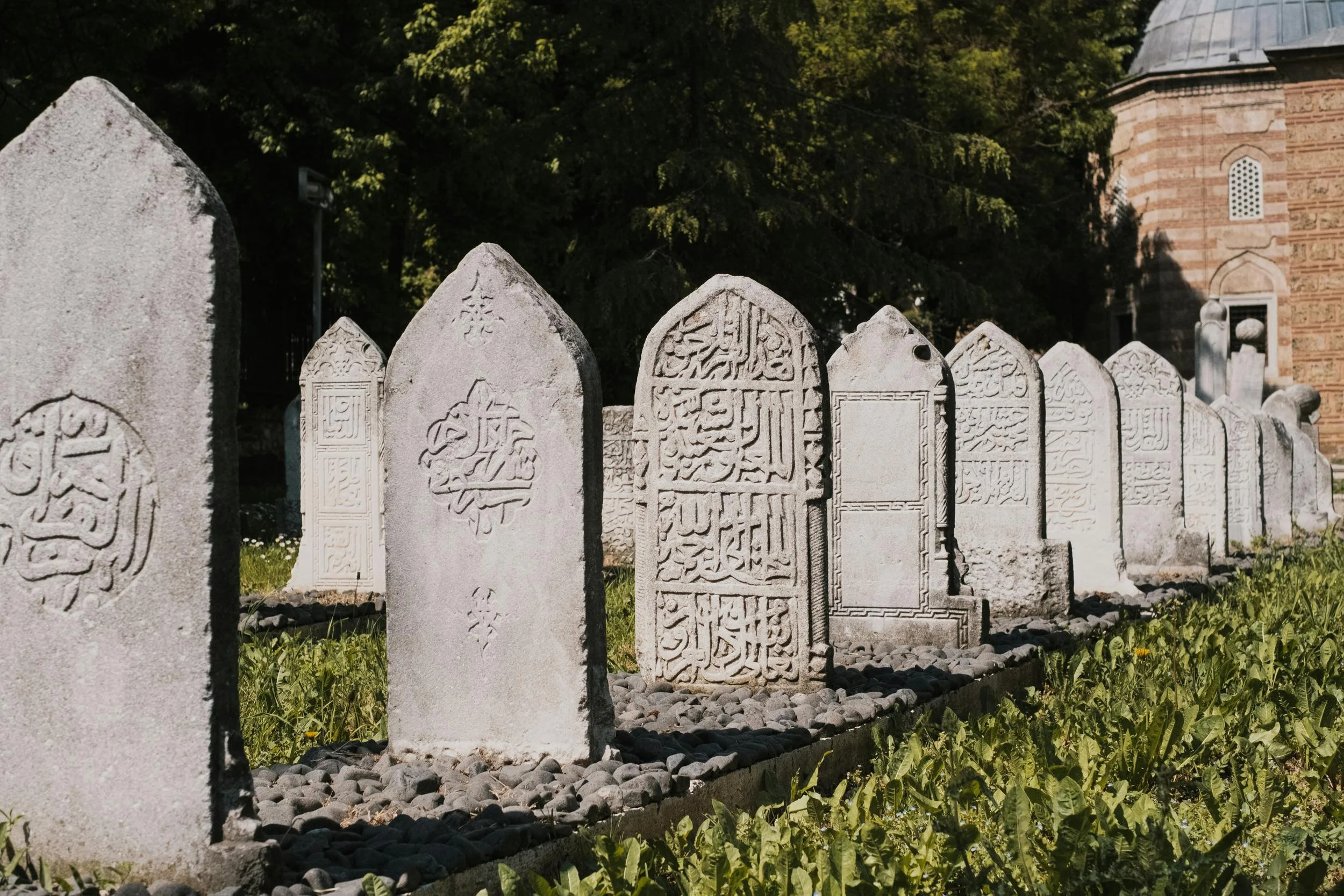
Intricately carved tombstones in Bursa's Ottoman cemetery with Arabic calligraphy.
What to put on a headstone
This is often the part families find most difficult, and most personal. There is no single right approach, but most headstones include:
The full name of the person who’s died
Their dates of birth and death
A short inscription, sometimes called an epitaph
The epitaph is your opportunity to say something true about the person, if they haven't decided what they would like inscribed before their death, which is something worth thinking about if you areplanning your own funeral. It might be a line from a poem or a piece of scripture, a phrase that captures something of who they were, or simply a few words of love. A few things worth keeping in mind:
Keep it concise. Space on a headstone is limited, and a short, well-chosen phrase often carries more weight than a longer one.
Think about how it will read. An inscription can be written from the perspective of the family, or as if in the voice of the person themselves.
Aim for something timeless. These words will be there for a long time, and read by many people. Something that feels right in ten years, not just right now, is usually the wisest choice.
If you are finding it hard to settle on the words, take your time. Many families find the right words come more naturally once some of the immediate grief has settled. Ourbereavement support resources may help during this period.
How much does a headstone cost?
Costs vary considerably depending on the material, the size, and the complexity of the lettering or design. As a rough guide, granite tends to be the most affordable option, while slate typically sits at the higher end. Marble, limestone, and sandstone usually fall somewhere in between.
It’s worth getting a clear quote that includes the cost of installation and any fees charged by the cemetery or churchyard for erecting a memorial, as these can be significant and are not always included in the initial price. For a broader picture of funeral costs, you can view ourfuneral prices for guidance on what to expect across different types of service.
How long do you have to wait?
This is something many families are not aware of in advance. Most cemeteries and churchyards require a waiting period of between six months and a year after a burial before a headstone can be installed. This allows time for the ground to settle and ensures the stone can be placed safely and securely. If you are arranging a memorial for an existing grave, or if your loved one was cremated, yourfuneral director will be able to advise on the specific requirements of the site.
Memorials at natural burial grounds
Natural burial grounds have become an increasingly popular choice for families who want a gentler, more ecological approach to burial, a subject we cover in more depth on ourcremation and burial page. Memorials at these sites work differently to those at traditional cemeteries, and the rules can vary from one site to another.
Many natural burial grounds permit little or nothing in the way of permanent markers, in keeping with their ethos of allowing the landscape to remain as undisturbed as possible. However, some sites do allow for meaningful, nature-sensitive tributes. GreenAcres, for example, permits hand-crafted wooden sculptures to be placed at graves, while Sheepdrove allows willow sculptures. These can be beautiful and deeply personal memorials, and they fit naturally into the landscape in a way that stone markers often do not.
If you are considering a natural burial, it is worth asking the site directly about their memorial policy early in the process, so that you can plan accordingly and find something that feels right within their guidelines.
Other types of memorial
A headstone is not the only way to create a lasting tribute. Some families choose to complement a grave memorial with something additional, or to create a memorial in a different form altogether. Other options include:
A memorial bench, often engraved with a name and a short inscription
A memorial tree, planted in a garden, woodland, or dedicated memorial site
A wall plaque, in a crematorium, chapel, or other significant location
An online memorial, which can offer a place for friends and family to share memories and photographs regardless of where they are in the world
None of these need be an either/or decision. Many families find that having more than one way to remember someone, like a physical place and a more personal or portable tribute, brings its own comfort. If you would like to talk through any aspect of arranging a memorial, our team atExit Here is always happy to help.