
What happens on the day of a funeral or cremation? A step-by-step guide
If you’ve never attended a funeral before, or if it has been a long time since you have, it is entirely natural to feel uncertain about what to expect. The day can feel laden with significance before it’s even begun, and not knowing what’s coming can add an extra layer of anxiety to an already difficult time.
This guide walks you through a typical funeral day from beginning to end. Every service is different, but understanding the broad shape of the day can help you feel a little more prepared, and a little more free to simply be present.
And like almost every element of a funeral, you have the chance to choose what’s right for you. Many people don't realise that a cremation or burial doesn't have to take place on the same day as the funeral service. We offer complete flexibility, so families can arrange things in whatever way feels right for them. For example, you might choose to hold a church service and reception on one day, with the cremation or burial taking place separately the following day, or even at a later date. Whether you'd like a traditional service, a memorial gathering, or a wake, we can help you plan each element individually, so you're never rushed and everything can be arranged with care.
The hours before
The morning of a funeral tends to have a particular quality to it. Some people find themselves busy with small tasks, others find they cannot do very much at all. Both are completely normal.
In practical terms, your funeral director will have confirmed the key timings with you in advance. You will know what time the hearse is due to depart, what time the service begins, and how long you have to get to the venue. If anything changes on the morning itself, your funeral director is your first point of contact. Do not hesitate to call them with questions, however small they might feel.
If family or friends are gathering somewhere before the service, it’s worth having someone designated to keep an eye on timings. It’s easy for the morning to slip away in conversation, emotion, and a steady stream of cups of tea. Having one person gently responsible for logistics means everyone else can be fully present.
The journey from the funeral home

The hearse carrying the coffin will depart from the funeral home at a set time, and in many cases the family will travel behind it, either in funeral cars arranged by the funeral director or in their own vehicles. If this is too much, or practically not possible, many people choose to meet directly at the venue where the service is taking place.
Travelling in a funeral car is an experience that many people find quietly meaningful. It provides a moment of transition, a clear beginning to the formal part of the day, and a little time with close family before the wider gathering at the venue.
The cortege, which is the procession of vehicles travelling together, will typically move at a respectful pace. If the route passes somewhere significant, perhaps the person's home, a place they loved, or somewhere that held meaning for them, this can sometimes be incorporated into the journey. It is worth discussing with your funeral director if this feels important to you.
Arriving at the venue
Whether the service is taking place at a church, crematorium, woodland burial ground, or somewhere else entirely, the arrival tends to follow a similar shape but there will be nuanced differences depending on the venue and if there are prior events happening.
In a church service, guests will usually be asked to arrive before the hearse, and a funeral director or member of staff will be on hand to guide people inside and answer any practical questions. This is also the moment when an order of service, if one has been prepared, is typically handed out.For a service at a crematorium, guests will wait outside the venue until the hearse arrives with the coffin, and then the funeral director will show everyone into the venue.
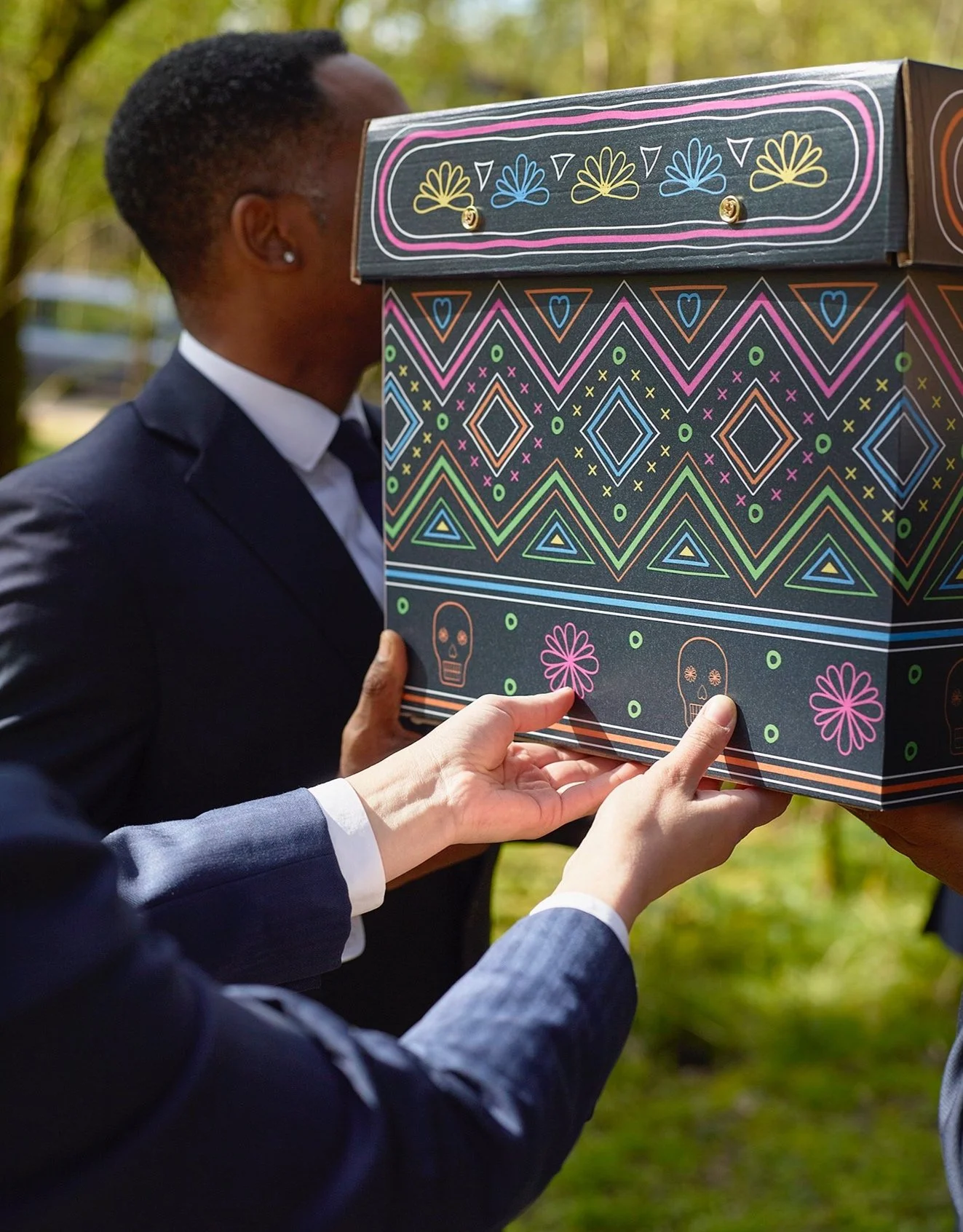
At most venues, when the coffin arrives it will be carried into the venue by pallbearers. These may be professional pallbearers provided by the funeral home, or family members and friends who have chosen to take on this role. Carrying someone you love is a profound act, and many families find it one of the most important things they do on the day. If this is something you are considering, your funeral director will prepare anyone taking part so they feel confident. You can read more about the process of carrying coffins in our blog.
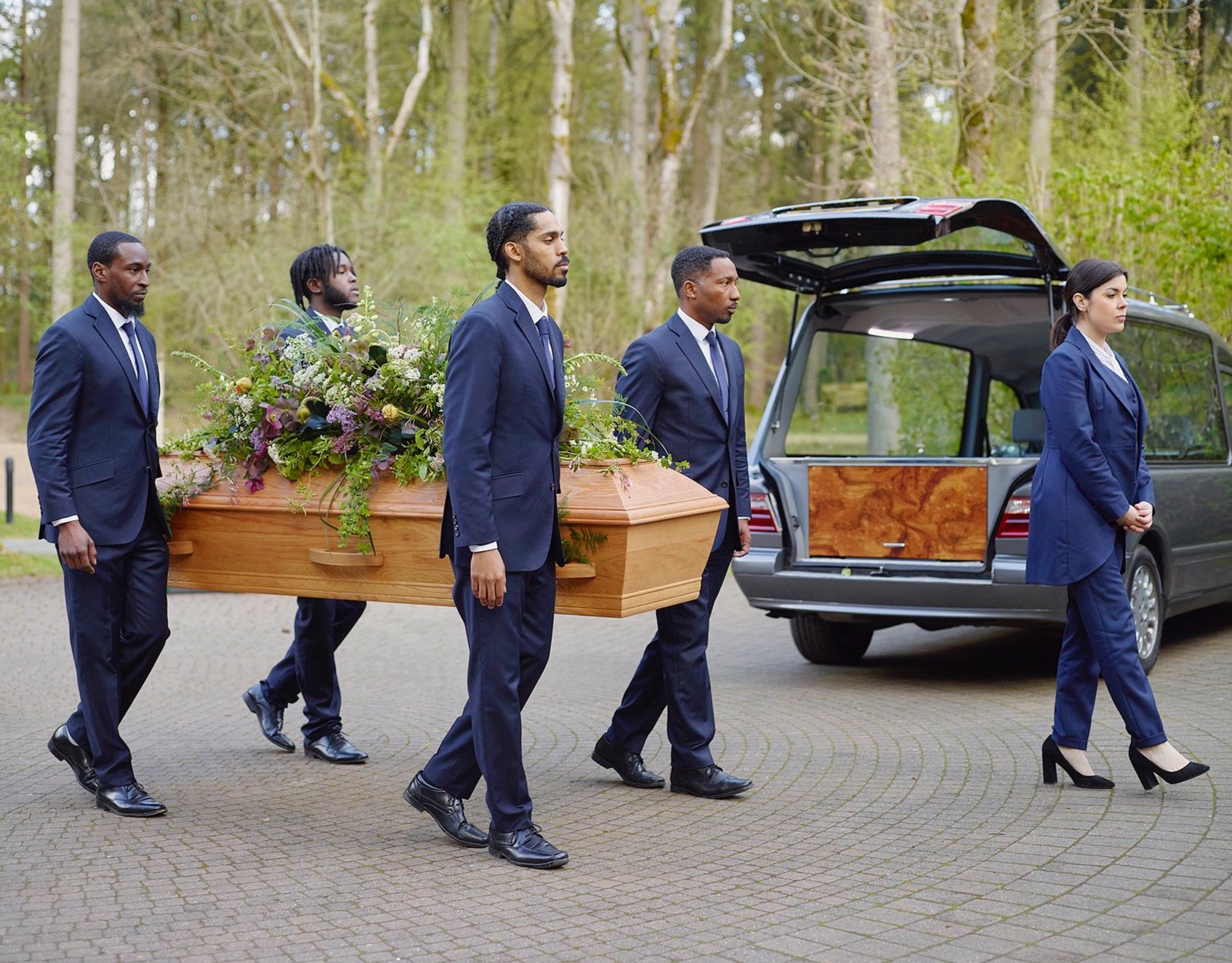
The congregation will usually be asked to stand as the coffin enters. From this point, the service begins.
The service itself
The structure of a funeral service varies considerably depending on whether it’s religious or humanist, and how much the family has chosen to personalise it. A typical service lasts between 30 and 60 minutes, though there is often flexibility, particularly in non-crematorium settings.